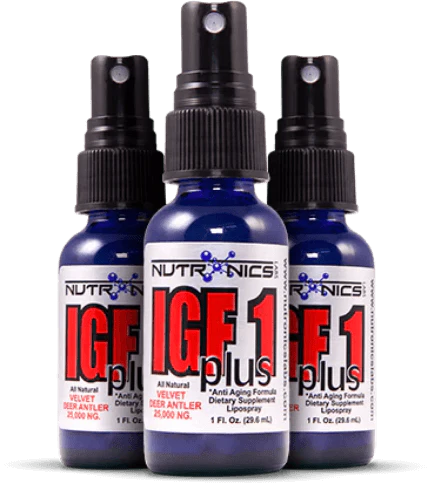
Nutronics Labs has the Purest, Most Potent, All Natural IGF-1 supplement On The Planet!
Nutronics Labs has the EXCLUSIVE World Wide Rights to the Premium, A-Grade New Zealand Red Deer Antler Velvet. Our Formula contains the Highest Potency of Natural IGF-1 available on the market! The amount of IGF-1 is actually "THE FACTOR" which determines the Strength and Effectiveness of Deer Antler products. Natural IGF-1 is measured in nanograms (ng), NOT milligrams (Mg).
DO NOT BE FOOLED by "other companies" that claim to be the strongest product because they actually have more milligrams (Mg) of Deer Antler in their product. ALWAYS find out how many nanograms of IGF-1 in the product!
Nutronics Labs has the Purest, Most Potent, All Natural IGF-1 supplement On The Planet!
Nutronics Labs has the EXCLUSIVE World Wide Rights to the Premium, A-Grade New Zealand Red Deer Antler Velvet. Our Formula contains the Highest Potency of Natural IGF-1 available on the market! The amount of IGF-1 is actually "THE FACTOR" which determines the Strength and Effectiveness of Deer Antler products. Natural IGF-1 is measured in nanograms (ng), NOT milligrams (Mg).
DO NOT BE FOOLED by "other companies" that claim to be the strongest product because they actually have more milligrams (Mg) of Deer Antler in their product. ALWAYS find out how many nanograms of IGF-1 in the product!
Order Now! 1-800-883-3144
World's Strongest, #1 Selling IGF-1 From Deer Antler Spray
Culminating over 20 years of development, research, and recent clinical testing, IGF-1 Plus™ uses a cold processing extraction. When combined with a liposome-based spray, it has a greater potential to permeate all tissues, even the blood brain barrier, as well as becoming a factor in the anti-aging movement. Where anti-aging is concerned, IGF-1 may be considered as a new miracle molecule of the 21st century. Our Liposome system delivers IGF-1 Plus™ directly into the bloodstream with a 98% absorption rate.
IGF-1 is the ultimate health, muscle and anti-aging factor. Insulin-like Growth Factor-1 (IGF-1) is made primarily in the liver in response to Human Growth Hormone (HGH) release. Unfortunately as we age we experience a relative HGH deficiency due to a lowered release from the pituitary resulting in a concomitant loss of IGF-1. The vast number of benefits of IGF-1 centers around muscle development and performance. IGF-1 transports glucose and amino acids into muscle while stimulating muscle DNA. This results in a muscular development in youth and muscle preservation in old age. For the athlete it means peak performance and quick recovery from intense training or injury. Other tissues of the body benefit from IGF-1 because of the affect on DNA and RNA (Ribonucleic Acid and Deoxyribonucleic Acid - are nucleic acids that are an essential part of every living cell). This tends to stimulate a faster production of proteins such as enzymes that help conduct normal metabolism.
Deer antlers grow at incredible speed and, after several weeks, as the antlers reach their final size, the cartilage within them gradually converts into bone. In the final process, the antler's blood supply and nerves are lost. When the antlers have fully hardened, the stags rub them against trees or rocks to remove the skin that remains. As a result of this rubbing, the deer develop sharp bony weapons for combat against threats to their harem of females during the autumn rut or mating season.
Each Spring the antler cycle begins anew and the skin around the pedicle expands and grows, initiating new antler growth. The hard antler from the previous season is cast off and the growth of the new season's velvet crop begins. It is then that the velvet is harvested for its medicinal and performancequalities.
When the Velvet Deer Antler has been removed, it is allowed to cool on tilted racks just before being frozen. It is then ready to be processed. If it is removed at the right time, while still in the cartilaginous state, almost all of the antler can be used for medicinal purposes.
Deer Antler Velvet Is Humanely Harvested
Nutronics Labs deer antler velvet is humanely harvested on our farms in New Zealand with absolutely no harm to the deer. This is done under complete veterinary supervision, paying particularly close attention to the deer's best interest and keeping the animals healthy and vibrant. We use vitamins and special feeds in the raising of the stags. The herd is kept in a healthy, viable setting in which they thrive and roam freely. The New Zealand government code of velveting emphasizes on protecting the deer from harm or stress.
IGF-1 also has a profound effect on the heart muscle. In a randomized, double blind human study IGF-1 stimulated a significant increase in strength and efficiency of heart function. These people had severely damaged hearts but still realized an increase in blood volume pumped through the heart. IGF-1 also helps preserve cardiac function in normal, healthy people as well. Read reviews below from the American Heart Association, and article from Science Daily.
One of the most important discoveries about Deer Antler Velvet in the last 30 years is that it contains a small molecular weight protein which has the unique ability to modulate the immune system. This means that, if the immune system is depressed, this particular protein can dramatically improve it.

IGF-1 and its ability to stimulate repair of damaged nerves
One of the most exciting discoveries about IGF-1 is its ability to stimulate repair of damaged nerves. In culture tubes containing spinal cord motor neurons, IGF-1 stimulated a 150% to 270% increase in activity. In animal studies IGF-1 repaired and reconnected nerve endings up to a distance of six millimeters. This is astounding when one realizes that severe nerve damage of more than one inch may result in permanent damage. In other animal studies IGF-1 increased intramuscular nerve sprouting tenfold.
IGF-1 and weight loss | Supports Healthy Weight Loss Regimens
IGF-1 preserves muscle tissue while it shifts your metabolism to preferentially burn fast. Regardless of the type of diet or weight loss program you are on, IGF-1 will help you support your weight management and promote a healthy body weight.
Advanced Delivery System Provides Better Absorption
Advanced Delivery System: Nutronics Labs IGF-1 Plus™ product uses a patented Lipo Gastric Delivery System which allows faster delivery and greater bio availability and longer duration of nutrient action. This has a distinct advantage over tablets, capsules and powder products. The Lipo Gastric Delivery System™ (LGDS) uses nano-particles that are delivered into the blood stream more rapidly, where they can be better absorbed and utilized without degradation in the liver as is experienced with other products.
Nutronics Labs IGF-1 Plus™ is derived from cold processed, concentrated Conu parvum velvet antler grown in New Zealand. Nutronics Labs holds the worldwide rights to this unique product and advanced technology along with Nutronics Labs' Liposome (sublingual) delivery system.
There are many variables which affect serum IGF-1 levels such as age, sex, nutritional status and growth hormone secretion. IGF-1 levels and growth hormones are low at birth, increase substantially during childhood and puberty, and then begin to decline during the 2nd - 3rd decade of life. This decline continues steadily until the 7th decade of life.
Growth Factors are poly-peptide bonded amino acid chains manufactured and released into the body to carry out specific actions.
IGF-1 Plus™ (Deer Antler Velvet) Contains:
Growth Factors
Insulin-like growth factor (IGF) I
Insulin-like growth factor (IGF) II
Nerve growth factor (NGF) and other neurotrophins
Transforming growth factor beta (TGF-B)
Bone morphogenetic proteins (BMPs)
Epidermal growth factor (EGF)
Erythropoietin (EPO)
Fibroblast growth factor (FGF)
Platelet-derived growth factor (PDGF)
Transforming growth factor alpha (TGF-A)
Growth differentiation factor-9 (GDF9)
Interluekins
Vascular endothelial growth factor
Myostatin (GDF-8)
Contains an assortment of both Amino Acids (Essential & Non-Essential) and Free Form Amino Acids
Is Deer Antler Spray Safe?
Studies on safety were commissioned from the School of Pharmacy at the University of Otago in New Zealand and overseen by Dr. James M. Suttie, a world recognized leader in velvet research. The studies were carried out according to OECD standards.
The studies showed that after 90 days of supplementation with velvet antler, the subjects were showing no unusual signs or symptoms. These provide reassurance that any potential build up of active ingredients resulting from taking well processed New Zealand Velvet Antler does not lead to toxicity. (Nutronics Labs utilizes the purest form of New Zealand Deer Antler Velvet and has been for the past 15 years and without any reports of side effects.) The doses of velvet antler evaluated in the trial were far greater than any doses of velvet antler commonly used by humans.
Insulin-like Growth Factors 1, 2 (IGF-1 and IGF-2) Helps Arthritis
IGF-1 and IGF-2 increase lean body mass, reduce fat, build bone, muscle, and nerves while assisting in glucose metabolism. Research indicates that IGF-1 encourages the absorption of both chondroitin and glucosamine sulfate which will helps in the promotion of healthy joints. Research also shows that a decline in IGF-1 levels is among the causes of bone disorder development. IGF-1 is considered by many scientists to be a marker in overall growth hormone status. IGF-1 looks and acts enough like insulin that your cell receptors may become suppressed, causing growth hormones to release stored fat. Through this mechanism, cells will use up fat rather than sugar or other carbohydrates. IGF-2 promotes tissue growth and is expressed primarily in embryonic and neonatal tissues.
Transforming Growth Factors A and B (TGF-A and TGF-B)
TGF-A promotes normal wound healing through a concerted effort with Epidermal Growth Factor and Platelet-Derived Growth Factor (PDGF). Without TGF-A, wound healing would be nearly impossible. TFG-B has an anti-inflammatory response to cytokine production and mesenchymal (MHC) expression. This promotes wound healing in a concerted effort with TGF-A, EGF and PDG while Inhibiting both macrophage and lymphocyte proliferation. Without TGF-B, wound healing would also be nearly impossible and an important "feedback loop" for cytokine anti-inflammatory production would not be in place. It is important to note that for normal tissue development to occur, whether it occurs through wound healing or regeneration, TGF A & B must be in a natural matrix of co-factors.
Epidermal Growth Factor (EGF)
EGF promotes healthy tissue development while impeding abnormal growth. EGF has also been shown to decrease gastric acid production. It promotes mesenchymal (lymphatic), glial (nerve), and epithelial (skin) cell proliferation.
Vascular Endothelial Growth Factor (VEGF)
Promotes venous, venule, artery, arteriole and capillary health by providing the essential co-factors for repairing and restoring damaged blood vessels.
These statements have not been evaluated by the FDA. These products are not intended to diagnose, treat, cure or prevent any disease. The information provided on this site is for informational purposes only and is not intended as a substitute for advice from your physician or other health care professional or any information contained on or in any product label or packaging. You should not use the information on this site for diagnosis or treatment of any health problem or for prescription of any medication or other treatment. You should consult with a health care professional before starting any diet, exercise or supplementation program, before taking any medication, or if you have or suspect you might have a health problem. You should not stop taking any medication without first consulting your physician.
Copyright 1995 - 2012 :: All Rights Reserved | Privacy Policy | World's #1 Source for IGF-1 Deer Antler Velvet | Deer Antler Spray | Nutronics Labs
Nutronics Labs Ultra 10,000ng IGF-1 Plus
Are you athletic or have intense workouts? Would you like to boost your energy levels and your recovery time from a hard workout? With 10,000 nanograms of IGF-1 from the World's Purest Deer Antler Velvet, Ultra is specially formulated to help with demanding workouts of athletic individuals and people who want to live a healthy lifestyle.
Other Ingredients: Purified water, Natural and Artificial flavors, Xylitol, Citric Acid, Lecithin, Potassium Sorbate (as preservative.) *Contains Soy
Dosage and Directions:
It is very important to follow these directions in order to achieve optimal results!
Shake bottle before each use. Then spray under the tongue at least 2 to 5 times 3 times per day. Hold the liquid under your tongue without swallowing for 20 seconds. Most people can actually feel a tingling sensation. This is the formula penetrating through your endocrine glands. The active molecules are then released directly into your bloodstream. This is how Nutronics Labs' liposome technology is able to deliver a remarkable 98% absorption rate!
Caution: Do not use if outer seal is broken. Not intended for individuals under the age of 18. Consult your health care provider prior to use if you are pregnant or nursing, have a medical condition, or when taking any medication.
These statements have not been evaluated by the FDA. These products are not intended to diagnose, treat, cure or prevent any disease.
Nutronics Labs Ultra Plus 25,000ng IGF-1 Plus
Do you lead an intensely active lifestyle in and out of the gym? Achieve peak performance with Nutronics Labs Ultra Plus which is 2.5 times stronger than Ultra with over 25,000ngs of IGF-1 from the World's Purest Deer Antler Velvet.
Other Ingredients: Purified water, Natural and Artificial flavors, Xylitol, Citric Acid, Lecithin, Potassium Sorbate (as preservative.) *Contains Soy
Dosage and Directions:
It is very important to follow these directions in order to achieve optimal results!
Shake bottle before each use. Then spray under the tongue at least 2 to 5 times 3 times per day. Hold the liquid under your tongue without swallowing for 20 seconds. Most people can actually feel a tingling sensation. This is the formula penetrating through your endocrine glands. The active molecules are then released directly into your bloodstream. This is how Nutronics Labs' liposome technology is able to deliver a remarkable 98% absorption rate!
Caution: Do not use if outer seal is broken. Not intended for individuals under the age of 18. Consult your health care provider prior to use if you are pregnant or nursing, have a medical condition, or when taking any medication.
These statements have not been evaluated by the FDA. These products are not intended to diagnose, treat, cure or prevent any disease.
Nutronics Labs Starter Plus 5,000ng IGF-1 Plus
Do you lead an active and healthy lifestyle? Then Nutronics Labs Starter Plus with 5,000 Nanograms of IGF-1 from the World's Purest Deer Antler Velvet, is the perfect choice to boost your energy levels. Starter Plus helps promote a healthy immune system and lean muscle mass. Order today and make IGF-1 Starter Plus a part of your active and healthy lifestyle.
Other Ingredients: Purified water, Natural and Artificial flavors, Xylitol, Citric Acid, Lecithin, Potassium Sorbate (as preservative.) *Contains Soy
Dosage and Directions:
It is very important to follow these directions in order to achieve optimal results!
Shake bottle before each use. Then spray under the tongue at least 2 to 5 times 3 times per day. Hold the liquid under your tongue without swallowing for 20 seconds. Most people can actually feel a tingling sensation. This is the formula penetrating through your endocrine glands. The active molecules are then released directly into your bloodstream. This is how Nutronics Labs' liposome technology is able to deliver a remarkable 98% absorption rate!
Caution: Do not use if outer seal is broken. Not intended for individuals under the age of 18. Consult your health care provider prior to use if you are pregnant or nursing, have a medical condition, or when taking any medication.
These statements have not been evaluated by the FDA. These products are not intended to diagnose, treat, cure or prevent any disease.
Nutronics Labs Starter 3,000ng IGF-1 Plus
Nutronics Labs Starter is the perfect choice to help with general health and wellness. With 3,000 nanograms of IGF-1 from the World's Purest Deer Antler Velvet, starter is a great way to start getting the many benefits of this wonderful product.
Other Ingredients: Purified water, Natural and Artificial flavors, Xylitol, Citric Acid, Lecithin, Potassium Sorbate (as preservative.) *Contains Soy
Dosage and Directions:
It is very important to follow these directions in order to achieve optimal results!
Shake bottle before each use. Then spray under the tongue at least 2 to 5 times 3 times per day. Hold the liquid under your tongue without swallowing for 20 seconds. Most people can actually feel a tingling sensation. This is the formula penetrating through your endocrine glands. The active molecules are then released directly into your bloodstream. This is how Nutronics Labs' liposome technology is able to deliver a remarkable 98% absorption rate!
Caution: Do not use if outer seal is broken. Not intended for individuals under the age of 18. Consult your health care provider prior to use if you are pregnant or nursing, have a medical condition, or when taking any medication.
These statements have not been evaluated by the FDA. These products are not intended to diagnose, treat, cure or prevent any disease.
Sleep Miracle Plus - Natural Sleep Aid
With Sleep Miracle™ you can be confident of getting a healthy, restful, drug-free and peaceful night's sleep, every night. Sleep Miracle™ is an all natural propriety combination of Passiflora incarnate, Valeriana officinalis, and melatonin (hormone of sleep).
Other Ingredients: Purified water, Natural and Artificial flavors, Xylitol, Citric Acid, Lecithin, Potassium Sorbate (as preservative.) *Contains Soy
Dosage and Directions:
It is very important to follow these directions in order to achieve optimal results!
Shake bottle before each use. Then spray under the tongue at least 2 to 5 times 3 times per day. Hold the liquid under your tongue without swallowing for 20 seconds. Most people can actually feel a tingling sensation. This is the formula penetrating through your endocrine glands. The active molecules are then released directly into your bloodstream. This is how Nutronics Labs' liposome technology is able to deliver a remarkable 98% absorption rate!
Caution: Do not use if outer seal is broken. Not intended for individuals under the age of 18. Consult your health care provider prior to use if you are pregnant or nursing, have a medical condition, or when taking any medication.
These statements have not been evaluated by the FDA. These products are not intended to diagnose, treat, cure or prevent any disease.
Nutronics Labs Maximum IGF-1 Plus
Nutronics Labs Maximum is one of the most effective Antler Velvet products on the market. With our 100,000 Nanograms of IGF-1 from the World's Purest Deer Antler Velvet, Maximum helps athletes and bodybuilders alike train harder, build lean muscle mass and speeds their recovery time. Maximum is also for anyone who wants to achieve optimum IGF levels.
Other Ingredients: Purified water, Natural and Artificial flavors, Xylitol, Citric Acid, Lecithin, Potassium Sorbate (as preservative.) *Contains Soy
Dosage and Directions:
It is very important to follow these directions in order to achieve optimal results!
Shake bottle before each use. Then take 12 drops under the tongue twice a day. Hold the liquid under your tongue for 20 seconds before swallowing. Most people can actually feel a tingling sensation. This is the formula penetrating through your endocrine glands. The active molecules are then released directly into your bloodstream. This is how Nutronics Labs' liposome technology is able to deliver a remarkable 98% absorption rate!
Caution: Do not use if outer seal is broken. Not intended for individuals under the age of 18. Consult your health care provider prior to use if you are pregnant or nursing, have a medical condition, or when taking any medication.
These statements have not been evaluated by the FDA. These products are not intended to diagnose, treat, cure or prevent any disease.
World's Strongest IGF-1 - Nutronics Labs Super Max IGF-1 Plus
Nutronics Labs Super Max is the strongest Antler Velvet on the market. With our 200,000 Nanograms of IGF-1 from the World's Purest Deer Antler Velvet, Super Max helps athletes and bodybuilders alike train harder, build lean muscle mass and speeds their recovery time, this is by far the strongest and most effective product on the market. This can be used by bodybuilders and athletes or anyone who wants to achieve optimum IGF levels.
Other Ingredients: Purified water, Natural and Artificial flavors, Xylitol, Citric Acid, Lecithin, Potassium Sorbate (as preservative.) *Contains Soy
Dosage and Directions:
It is very important to follow these directions in order to achieve optimal results!
Shake bottle before each use. Take 14 drops under the tongue 3 times per day. Hold for 20 seconds before swallowing for best results, Most people can actually feel a tingling sensation. This is the formula penetrating through your endocrine glands. The active molecules are then released directly into your bloodstream. This is how Nutronics Labs' liposome technology is able to deliver a remarkable 98% absorption rate!
Caution: Do not use if outer seal is broken. Not intended for individuals under the age of 18. Consult your health care provider prior to use if you are pregnant or nursing, have a medical condition, or when taking any medication.
These statements have not been evaluated by the FDA. These products are not intended to diagnose, treat, cure or prevent any disease.
Weight Loss Formula Plus With Raspberry Ketone
Nutronics Labs Weight Loss Formula plus is one of the strongest all natural weight loss products on the market today, with it's 'Key" ingredient Raspberry Keytone Extract, which has been recommended by Dr. Oz (see video link). For Maximum Effectiveness, Nutronics Labs has specially designed this to be delivered in an enteric coated liposome tablet. This state-of-the-art coating allows our weight loss formula to reach your intestines BEFORE it is broken down by digestive acids in your stomach, which gives you a 98% absorption rate, unlike traditional tablets that dissolve by the acid in your upper intestines in which you will only receive 19-25% absorption. This is a very important method that was developed by Nutronics Labs chemist's for optimal results for your weight loss program. Nutronics Labs weight loss formula plus, is a dietary supplement and appetite suppressant that helps boost your metabolism.
Other Ingredients: Purified water, Natural and Artificial flavors, Xylitol, Citric Acid, Lecithin, Potassium Sorbate (as preservative.) *Contains Soy
Suggested use: Take one tablet 20-30 minutes prior to your two main meals of the day with 8oz. glass of water. You may also use Nutronics Labs Weight Loss Plus in conjunction with any of our IGF-1 liposome spray products for optimal results.
Caution: Do not use if outer seal is broken. Not intended for individuals under the age of 18. Consult your health care provider prior to use if you are pregnant or nursing, have a medical condition, or when taking any medication.
These statements have not been evaluated by the FDA. These products are not intended to diagnose, treat, cure or prevent any disease.
IGF-1 Can Improve Immune Response and Vice Versa
From Velvet Deer Antler: The Ultimate Antiaging Supplement, Dr. Alex Duarte, O.D., Ph.D.
An interesting relationship between IGF-1 and the immune system has been uncovered in recent research. The activity between all of the major immune cell types such as T-cells and B-cells, natural killer cells, and macrophages have been shown to be altered by growth HGH. Studies have shown that lymphocyte-derived growth hormone is involved in the production of more lymphocytes and that these, in turn, can actually produce IGF-1 within the immune system. Thus, not only the liver but white blood cells are capable of producing IGF-1. This provides a biochemical basis for a line of communication between the immune system and the neuroendrocrine system, thanks to the action of HGH.
Hson-Mon Chang and Paul Pui-Hay But. Pharmacology and Applications of Chinese Materia Medica. World Scientific Publishing Co. PTE. Ltd. 1987.
Bensky, D., A. Gamble and T. Kaptchuk. Chinese Herbal Medicine Materia Medica . Eastland Press, Inc. 1986.
Falloon, J. The Deer Farmer. Pile Wellington, New Zealand. p. 2. Sept. 1992..
Houck, JC., and K. Vickers. “The Inhibition of Inflammation and Acceleration of Tissue Repair by Cartilage Powder.” Surgery. 51. May, 1962.
Prudden, J., ER. Wolarsky, and L. Balassa. “The Acceleration of Healing.” The Journal of Surgery, Gynecology and Obstetrics. Vol. 128. 1969.
Prudden, J. and J. Allen. “The Clinical Acceleration of Healing with a Cartilage Preparation: A Controlled Study.” The Journal of the American Medical Association. Vol. 192. May, 1965.
Prudden, J. and G. Mishihara. “The Acceleration of Wound Healing with Cartilage-1.” The Journal of Surgery, Gynecology, and Obstetrics. September, 1957.
Ghosh, P., M. Smith and C. Wells. Second Line Agents in the Treatment of Rheumatic Disease. Marcel Dekker. New York. 1992.
Roden, L. “Effect of Hexosamines on the Synthesis of Chondroitin Sulfuric Acid In Vitro.” Ark. Keml. 10:3. 1956.
Karzel, K. and R. Domenhoz. “Effects of Hexosamine Derivatives and Uronic Acid Derivatives, Glycosaminoglycan Metabolism of Fibroblast Cultures.” Pharmacology. 5. 337. 1971.
Setnikar, I., R. Cereda and MA. Pacini. “Anti-Reactive Properties of Glucosamine Sulfate.” Arzn. Forsch. 41(2):157. 1991.
Wang, B. et al. “Stimulating Effect of Deer Antler Extract on Protein Synthesis in Senescence-Accelerated Mice in Vivo.” Chem. Pharm. Bull. 36(7):2593-98. 1988.
Prudden, J. and J. Allen. “Clinical Acceleration of Wound Healing with a Cartilage Preparation: A Controlled Study.” The Journal of the American Medical Association. Vol. 192. May, 1965
Prudden, J., ER. Wolarsky and L. Balassa. “The Acceleration of Healing.” The Journal of Surgery, Gynecology, and Obstetrics. Vol. 128. 1969.
Bollet, AJ. “Stimulation of Protein-Chondroitin Sulfate Synthesis by Normal and Osteoarthritic Articular Cartilage.” Arthritis and Rheumatism. 11:663. 1968.
This information is contained in Part II, “General Description of Catrix, Summary of Dosage Forms and the Results of Catrix Therapy”. The Journey, a professional publication distributed to doctors by Dr. J. Prudden.
Rejholic, V. “Long Term Studies of Antiosteoarthritic Drugs.” Seminars in Arthritis and Rheumatism. 17(2):suppl. 1. Nov. 1987.
Prudden, J., and L. Balassa. “The Biological Activity of Bovine Cartilage Preparations.” Seminars in Arthritis and Rheumatism. 3(4):298. 1974.
Duarte, A. Jaws for Life: The Story of Shark Cartilage. Self Published. p. 18. 1993.
Prudden, J. “The Treatment of Human Cancer with Agents Prepared from Bovine Cartilage.” Journal of Biological Response Modifzers. 4:551-558. 1985.
Suttie, JM., et al. “The Velvet Antler Industry: Background and Research Findings. International Symposium on Cervi Parvum Cornu.” Abdo, J., ed. The Korean Society of Pharmacology, Seoul, Korea. Oct. 7, 1994.
Falloon, J. The Deer Farmer. Pile Wellington, New Zealand. p. 2. Sept. 1992.
Rejholec, V. “Long Term Studies of Antiosteoarthritic Drugs.” Seminars in Arthritis and Rheumatism. 17(2):suppl. 1. Nov. 1987.
Morrison, LM., and OA. Schjeide. Absorption, Distribution, Metabolism and Excretion of Acid Mucopolysaccharides Administered to Animals and Patients, Coronary Heart Disease and the Mucopolysaccharide (Glycosaminoglycans). CC. Thomas. Springfield. 109.
Prudden, J. Bovine Cartilage. 4:551-584.
Spark, RF. Male Sexual Health. Yonkers, New York. Consumer Reports Book. pp. 80,90,93. 1991.
Ge, R., and P. Hong. “Effects ofGinsenosides and Pantocrine on the Reproductive Endocrine System in Male Rats.” Journal of Traditional Chinese Medicine. 6(4):301-304. 1986.
Renyong, GP., and P. Hong. “Effects of Ginsenosides and Pantocrine on the Reproductive Endocrine System in Male Rats.” Journal of Traditional Chinese Medicine. 6(4):301-304. 1986.
Wang, B., et al. “Stimulating Effect of Deer Antler Extract on Protein Synthesis in Senescence-Accelerated Mice in Vivo.” Chemical Parmacologic Bulletin. 36(7):2593-2598. 1988.
Wang, B., et al. “Effects of Repeated Administration of Deer Antler Extract on Biochemical Changes Related to Aging in Senescence-Accelerated Mice.” Chemical Parmacologic Bulletin. 36(7):2587-2592. 1988.
From Velvet Deer Antler: The Ultimate Antiaging Supplement, Dr. Alex Duarte, O.D., Ph.D.
Velvet antler is made up of primarily cartilage. Scientific research has now demonstrated that cartilage, bovine, chicken, shark, and antler cartilage, is producing dramatic results in the treatment of the most degenerative and life threatening diseases including cancer. Cartilage has proven to be safe and effective in the treatment of osteo- and rheumatoid arthritis, psoriasis, eczema, colitis, enteritis, poison ivy/oak, acne, varicose ulcers, pruritis ani, fistulas, hemorrhoids, wound healing, phlebitis, cold sores, shingles, lupus ulcers, and cancer. Cartilage is an acidic mucopolysaccharide/protein complex containing collagen and glycosaminoglycans, including chondroitin sulfate A, B, and C. These compounds and others make cartilage:
One of the most powerful, natural anti-inflammatory agents and wound healing substances known.
A stimulant for the cellular and humoral components of our immune system. This makes it effective against bacterial, viral, and fungal infections.
An inhibitor of cell division in malignant or benign tumors.
Stronger and Accelerated Wound Healing: Dr. Prudden and J. Allen, M.D., showed cartilage-treated wounds increased the overall wound tensile strength by 42% over the control group. 13 Also, cartilage-treated wounds healed faster than than normal with cartilage.14
Osteoarthritis: Cartilage reduces the inflammation of osteoarthritis and the polysaccharide portion stimulates protein and chondroitin sulfate synthesis in the joint (it may restore some joint integrity).15
Seven hundred moderate to advanced osteoarthritic patients were treated with oral bovine cartilage at 9 grams per day. Fifty-nine percent were totally relieved, 26% had a good response, eight percent had a fair response, and only seven percent had a poor response. 16
Cartilage Study: In a five-year double blind study on 14 7 patients at the Department of Internal Medicine and Rheumatology at the Polyclinic of the Medical Faculty of Charles University in Czechoslovakia, Dr. V. Rejholec showed an 85% reduction in pain scores in the cartilage group compared to a five percent reduction in pain in the group treated with standard drugs (NSAID: nonsteroidal anti-inflammatory drugs). More significantly, there was 63% less joint degeneration in the cartilage treated group.17
Rheumatoid Arthritis: Dr. John F. Prudden treated nine patients with severe rheumatoid arthritis with an average of 500 cubic centimeters of subcutaneously injected bovine cartilage. Three had excellent results while six had good results. This shows there was a 100% effective response rate. Realize no other medicine has ever produced these kinds of results; all of the patients in the study suffered severe pain and stiffness in multiple joints, primarily the knees, wrists, elbows, hips, and fingers.18 Oral preparations of shark cartilage are currently producing similar results.19
Human Cancer Studies: The landmark study of cartilage therapy for cancer began in 1974 when Dr. John Prudden was granted a study protocol by the U.S. Food and Drug Administration. All of the patients had failed with chemotherapy, radiation, and surgery. The following types of cancers were treated by Dr. Prudden: breast, cervix, ovary, prostate, lung, liver, bone, stomach, pancreas, brain, thyroid, and Hodgkin’s Disease (lymph).20 Ninety percent of the patients had a positive response and some of the cures were achieved fastest when chemotherapy was combined with cartilage. In fact, cartilage protected the patients from the severe side effects of chemotherapy. 21 Thus cartilage may be taken and should be taken with standard forms of treatment.
Dr. Prudden’s study was conducted with bovine (calf) cartilage. It appears the health benefits from cartilage is not species specific. Cartilage from cows, sharks, chickens, and now deer antler appears to have medicinal value.
Hson-Mon Chang and Paul Pui-Hay But. Pharmacology and Applications of Chinese Materia Medica. World Scientific Publishing Co. PTE. Ltd. 1987.
Bensky, D., A. Gamble and T. Kaptchuk. Chinese Herbal Medicine Materia Medica . Eastland Press, Inc. 1986.
Falloon, J. The Deer Farmer. Pile Wellington, New Zealand. p. 2. Sept. 1992..
Houck, JC., and K. Vickers. “The Inhibition of Inflammation and Acceleration of Tissue Repair by Cartilage Powder.” Surgery. 51. May, 1962.
Prudden, J., ER. Wolarsky, and L. Balassa. “The Acceleration of Healing.” The Journal of Surgery, Gynecology and Obstetrics. Vol. 128. 1969.
Prudden, J. and J. Allen. “The Clinical Acceleration of Healing with a Cartilage Preparation: A Controlled Study.” The Journal of the American Medical Association. Vol. 192. May, 1965.
Prudden, J. and G. Mishihara. “The Acceleration of Wound Healing with Cartilage-1.” The Journal of Surgery, Gynecology, and Obstetrics. September, 1957.
Ghosh, P., M. Smith and C. Wells. Second Line Agents in the Treatment of Rheumatic Disease. Marcel Dekker. New York. 1992.
Roden, L. “Effect of Hexosamines on the Synthesis of Chondroitin Sulfuric Acid In Vitro.” Ark. Keml. 10:3. 1956.
Karzel, K. and R. Domenhoz. “Effects of Hexosamine Derivatives and Uronic Acid Derivatives, Glycosaminoglycan Metabolism of Fibroblast Cultures.” Pharmacology. 5. 337. 1971.
Setnikar, I., R. Cereda and MA. Pacini. “Anti-Reactive Properties of Glucosamine Sulfate.” Arzn. Forsch. 41(2):157. 1991.
Wang, B. et al. “Stimulating Effect of Deer Antler Extract on Protein Synthesis in Senescence-Accelerated Mice in Vivo.” Chem. Pharm. Bull. 36(7):2593-98. 1988.
Prudden, J. and J. Allen. “Clinical Acceleration of Wound Healing with a Cartilage Preparation: A Controlled Study.” The Journal of the American Medical Association. Vol. 192. May, 1965
Prudden, J., ER. Wolarsky and L. Balassa. “The Acceleration of Healing.” The Journal of Surgery, Gynecology, and Obstetrics. Vol. 128. 1969.
Bollet, AJ. “Stimulation of Protein-Chondroitin Sulfate Synthesis by Normal and Osteoarthritic Articular Cartilage.” Arthritis and Rheumatism. 11:663. 1968.
This information is contained in Part II, “General Description of Catrix, Summary of Dosage Forms and the Results of Catrix Therapy”. The Journey, a professional publication distributed to doctors by Dr. J. Prudden.
Rejholic, V. “Long Term Studies of Antiosteoarthritic Drugs.” Seminars in Arthritis and Rheumatism. 17(2):suppl. 1. Nov. 1987.
Prudden, J., and L. Balassa. “The Biological Activity of Bovine Cartilage Preparations.” Seminars in Arthritis and Rheumatism. 3(4):298. 1974.
Duarte, A. Jaws for Life: The Story of Shark Cartilage. Self Published. p. 18. 1993.
Prudden, J. “The Treatment of Human Cancer with Agents Prepared from Bovine Cartilage.” Journal of Biological Response Modifzers. 4:551-558. 1985.
Suttie, JM., et al. “The Velvet Antler Industry: Background and Research Findings. International Symposium on Cervi Parvum Cornu.” Abdo, J., ed. The Korean Society of Pharmacology, Seoul, Korea. Oct. 7, 1994.
Falloon, J. The Deer Farmer. Pile Wellington, New Zealand. p. 2. Sept. 1992.
Rejholec, V. “Long Term Studies of Antiosteoarthritic Drugs.” Seminars in Arthritis and Rheumatism. 17(2):suppl. 1. Nov. 1987.
Morrison, LM., and OA. Schjeide. Absorption, Distribution, Metabolism and Excretion of Acid Mucopolysaccharides Administered to Animals and Patients, Coronary Heart Disease and the Mucopolysaccharide (Glycosaminoglycans). CC. Thomas. Springfield. 109.
Prudden, J. Bovine Cartilage. 4:551-584.
Spark, RF. Male Sexual Health. Yonkers, New York. Consumer Reports Book. pp. 80,90,93. 1991.
Ge, R., and P. Hong. “Effects ofGinsenosides and Pantocrine on the Reproductive Endocrine System in Male Rats.” Journal of Traditional Chinese Medicine. 6(4):301-304. 1986.
Renyong, GP., and P. Hong. “Effects of Ginsenosides and Pantocrine on the Reproductive Endocrine System in Male Rats.” Journal of Traditional Chinese Medicine. 6(4):301-304. 1986.
Wang, B., et al. “Stimulating Effect of Deer Antler Extract on Protein Synthesis in Senescence-Accelerated Mice in Vivo.” Chemical Parmacologic Bulletin. 36(7):2593-2598. 1988.
Wang, B., et al. “Effects of Repeated Administration of Deer Antler Extract on Biochemical Changes Related to Aging in Senescence-Accelerated Mice.” Chemical Parmacologic Bulletin. 36(7):2587-2592. 1988.
From Velvet Deer Antler: The Ultimate Antiaging Supplement, Dr. Alex Duarte, O.D., Ph.D.
Clifford et al (1979) measured the effect of alcohol velvet antlerextract on a number of cardiac measures including cardiacoutput, stroke volume, heart rate, arterial pressure, and centralvenous pressure in anesthecised dogs. They found significantincreases in stroke volume, compared with untreated dogs, butno other consistent, significant changes were observed. Sanoet al (1972) found that velvet antler extract (V AE) reduced heart rate in isolated guinea pig atria. In contrast Reshetrikova(1954) found that V AE improved the operation of the heart(increased pulse and heart tone) in sick children. This may beconsistent with an overall tonic effect rather than a specificeffect on the heart itself.
Tevi (1969) studied the acute hypotensive effect of alcohol velvetantler extract. His crucial finding was that velvet antler extractacted on the peripheral vascular system through theparasympathetic nervous system. In doing so velvet antlerextract could counteract the effect of previously administeredadrenalin. The author concluded that velvet antler extractacted in a manner similar to a cholinergic substance. It can be concluded, at this stage, that velvet antler extractacts like a heart tonic and may influence blood pressure byacting on peripheral blood vessels and the kidney.
In the previous section, evidence was given that velvet antlerextract acted to lower blood pressure acutely by acting on theperipheral vascular system. Albov (1969) presented case histories of treatment for high andlow blood pressure in a wide variety of patients. He neatlyside-stepped the mechanism by stating that velvet antler extracteffects varied with the condition of the patients’ nervous system.He did indicate that treatment with velvet antler was moresuccessful in patients which had not suffered perturbation inblood pressure for an extended period (10 years or more). Albov studied 32 patients with high blood pressure caused byearly onset menopause or obesity. They were treated with velvetantler extract either orally or by injection for 20 or 30 daysrespectively and then examined by a physician. Twenty-six ofthe patients had measurably lower blood pressure and reportedan improvement in the condition. Those reporting noimprovement had high blood pressure for an extended periodof 9 to 10 years. The same author also studied the effects ofvelvet antler extract on 13 patients with hypertension causedby disorders of heart muscle activity. The patients were given 20 daily injections of velvet antler extract and were examined10 days after the final treatment. Eleven of the patients showedan improvement (84%). In both studies dose levels were 2 milliliters per day by injection or 4.5 milliliters orally. Mainlyfemale patients were studied but successful treatment of menwere also reported. In women treated for prematuremenopause, menses returned in most. One serious deficiencywas that there was no data from control patients presented;this means that the findings, although promising are notconclusive yet. Wang (1996) has shown that one active ingredient in terms ofhypotensive action from velvet antler is lysophosphatidylcholine.
Hson-Mon Chang and Paul Pui-Hay But. Pharmacology and Applications of Chinese Materia Medica. World Scientific Publishing Co. PTE. Ltd. 1987.
Bensky, D., A. Gamble and T. Kaptchuk. Chinese Herbal Medicine Materia Medica . Eastland Press, Inc. 1986.
Falloon, J. The Deer Farmer. Pile Wellington, New Zealand. p. 2. Sept. 1992..
Houck, JC., and K. Vickers. “The Inhibition of Inflammation and Acceleration of Tissue Repair by Cartilage Powder.” Surgery. 51. May, 1962.
Prudden, J., ER. Wolarsky, and L. Balassa. “The Acceleration of Healing.” The Journal of Surgery, Gynecology and Obstetrics. Vol. 128. 1969.
Prudden, J. and J. Allen. “The Clinical Acceleration of Healing with a Cartilage Preparation: A Controlled Study.” The Journal of the American Medical Association. Vol. 192. May, 1965.
Prudden, J. and G. Mishihara. “The Acceleration of Wound Healing with Cartilage-1.” The Journal of Surgery, Gynecology, and Obstetrics. September, 1957.
Ghosh, P., M. Smith and C. Wells. Second Line Agents in the Treatment of Rheumatic Disease. Marcel Dekker. New York. 1992.
Roden, L. “Effect of Hexosamines on the Synthesis of Chondroitin Sulfuric Acid In Vitro.” Ark. Keml. 10:3. 1956.
Karzel, K. and R. Domenhoz. “Effects of Hexosamine Derivatives and Uronic Acid Derivatives, Glycosaminoglycan Metabolism of Fibroblast Cultures.” Pharmacology. 5. 337. 1971.
Setnikar, I., R. Cereda and MA. Pacini. “Anti-Reactive Properties of Glucosamine Sulfate.” Arzn. Forsch. 41(2):157. 1991.
Wang, B. et al. “Stimulating Effect of Deer Antler Extract on Protein Synthesis in Senescence-Accelerated Mice in Vivo.” Chem. Pharm. Bull. 36(7):2593-98. 1988.
Prudden, J. and J. Allen. “Clinical Acceleration of Wound Healing with a Cartilage Preparation: A Controlled Study.” The Journal of the American Medical Association. Vol. 192. May, 1965
Prudden, J., ER. Wolarsky and L. Balassa. “The Acceleration of Healing.” The Journal of Surgery, Gynecology, and Obstetrics. Vol. 128. 1969.
Bollet, AJ. “Stimulation of Protein-Chondroitin Sulfate Synthesis by Normal and Osteoarthritic Articular Cartilage.” Arthritis and Rheumatism. 11:663. 1968.
This information is contained in Part II, “General Description of Catrix, Summary of Dosage Forms and the Results of Catrix Therapy”. The Journey, a professional publication distributed to doctors by Dr. J. Prudden.
Rejholic, V. “Long Term Studies of Antiosteoarthritic Drugs.” Seminars in Arthritis and Rheumatism. 17(2):suppl. 1. Nov. 1987.
Prudden, J., and L. Balassa. “The Biological Activity of Bovine Cartilage Preparations.” Seminars in Arthritis and Rheumatism. 3(4):298. 1974.
Duarte, A. Jaws for Life: The Story of Shark Cartilage. Self Published. p. 18. 1993.
Prudden, J. “The Treatment of Human Cancer with Agents Prepared from Bovine Cartilage.” Journal of Biological Response Modifzers. 4:551-558. 1985.
Suttie, JM., et al. “The Velvet Antler Industry: Background and Research Findings. International Symposium on Cervi Parvum Cornu.” Abdo, J., ed. The Korean Society of Pharmacology, Seoul, Korea. Oct. 7, 1994.
Falloon, J. The Deer Farmer. Pile Wellington, New Zealand. p. 2. Sept. 1992.
Rejholec, V. “Long Term Studies of Antiosteoarthritic Drugs.” Seminars in Arthritis and Rheumatism. 17(2):suppl. 1. Nov. 1987.
Morrison, LM., and OA. Schjeide. Absorption, Distribution, Metabolism and Excretion of Acid Mucopolysaccharides Administered to Animals and Patients, Coronary Heart Disease and the Mucopolysaccharide (Glycosaminoglycans). CC. Thomas. Springfield. 109.
Prudden, J. Bovine Cartilage. 4:551-584.
Spark, RF. Male Sexual Health. Yonkers, New York. Consumer Reports Book. pp. 80,90,93. 1991.
Ge, R., and P. Hong. “Effects ofGinsenosides and Pantocrine on the Reproductive Endocrine System in Male Rats.” Journal of Traditional Chinese Medicine. 6(4):301-304. 1986.
Renyong, GP., and P. Hong. “Effects of Ginsenosides and Pantocrine on the Reproductive Endocrine System in Male Rats.” Journal of Traditional Chinese Medicine. 6(4):301-304. 1986.
Wang, B., et al. “Stimulating Effect of Deer Antler Extract on Protein Synthesis in Senescence-Accelerated Mice in Vivo.” Chemical Parmacologic Bulletin. 36(7):2593-2598. 1988.
Wang, B., et al. “Effects of Repeated Administration of Deer Antler Extract on Biochemical Changes Related to Aging in Senescence-Accelerated Mice.” Chemical Parmacologic Bulletin. 36(7):2587-2592. 1988.
From Velvet Deer Antler: The Ultimate Antiaging Supplement, Dr. Alex Duarte, O.D., Ph.D.
One of the big problems associated with losing weight, especially with calorie restriction, is a significant loss in muscle mass when there is a commensurate loss of fat. Any procedure that can preserve lean muscle body mass when fat loss is being experienced, would be most helpful and certainly improve the health of the patient during the weight loss procedure. According to Doctor Edmund Chein, patients who were obese and were given human growth hormone injections lost up to 12% of their body fat every six months. As an example, a patient that weighed 200 pounds could lose 24 pounds of fat every six months. We know that human growth hormone increases the fat burning mechanism of the body, but because it increases IGF-1, the IGF-1, in turn, not only preserves muscle tissue but increases muscle mass. IGF-1 may also improve the fat burning mechanism and improve hormonal weight loss effects without having to restrict calorie consumption.
Studies have shown that the aging pituitary gland contains as much growth hormone as it did when the individual was younger. However, the ability to release the growth hormone is somehow blocked as the body ages. Something happens in the feedback loop between the release of IGF-1 in the liver and the hypothalamus in the brain. Ordinarily, a reduction in the IGF-1 tells the brain to direct the pituitary to make more growth hormone but this feedback loop breaks down with age. For this reason there should be no negative feedback loop problems associated with just taking IGF-1 since the mechanism in the aging person is already diminished. It would also indicate that IGF-1 should be taken in order to preserve muscle mass, increase energy levels, and maintain proper body weight.
Hson-Mon Chang and Paul Pui-Hay But. Pharmacology and Applications of Chinese Materia Medica. World Scientific Publishing Co. PTE. Ltd. 1987.
Bensky, D., A. Gamble and T. Kaptchuk. Chinese Herbal Medicine Materia Medica . Eastland Press, Inc. 1986.
Falloon, J. The Deer Farmer. Pile Wellington, New Zealand. p. 2. Sept. 1992..
Houck, JC., and K. Vickers. “The Inhibition of Inflammation and Acceleration of Tissue Repair by Cartilage Powder.” Surgery. 51. May, 1962.
Prudden, J., ER. Wolarsky, and L. Balassa. “The Acceleration of Healing.” The Journal of Surgery, Gynecology and Obstetrics. Vol. 128. 1969.
Prudden, J. and J. Allen. “The Clinical Acceleration of Healing with a Cartilage Preparation: A Controlled Study.” The Journal of the American Medical Association. Vol. 192. May, 1965.
Prudden, J. and G. Mishihara. “The Acceleration of Wound Healing with Cartilage-1.” The Journal of Surgery, Gynecology, and Obstetrics. September, 1957.
Ghosh, P., M. Smith and C. Wells. Second Line Agents in the Treatment of Rheumatic Disease. Marcel Dekker. New York. 1992.
Roden, L. “Effect of Hexosamines on the Synthesis of Chondroitin Sulfuric Acid In Vitro.” Ark. Keml. 10:3. 1956.
Karzel, K. and R. Domenhoz. “Effects of Hexosamine Derivatives and Uronic Acid Derivatives, Glycosaminoglycan Metabolism of Fibroblast Cultures.” Pharmacology. 5. 337. 1971.
Setnikar, I., R. Cereda and MA. Pacini. “Anti-Reactive Properties of Glucosamine Sulfate.” Arzn. Forsch. 41(2):157. 1991.
Wang, B. et al. “Stimulating Effect of Deer Antler Extract on Protein Synthesis in Senescence-Accelerated Mice in Vivo.” Chem. Pharm. Bull. 36(7):2593-98. 1988.
Prudden, J. and J. Allen. “Clinical Acceleration of Wound Healing with a Cartilage Preparation: A Controlled Study.” The Journal of the American Medical Association. Vol. 192. May, 1965
Prudden, J., ER. Wolarsky and L. Balassa. “The Acceleration of Healing.” The Journal of Surgery, Gynecology, and Obstetrics. Vol. 128. 1969.
Bollet, AJ. “Stimulation of Protein-Chondroitin Sulfate Synthesis by Normal and Osteoarthritic Articular Cartilage.” Arthritis and Rheumatism. 11:663. 1968.
This information is contained in Part II, “General Description of Catrix, Summary of Dosage Forms and the Results of Catrix Therapy”. The Journey, a professional publication distributed to doctors by Dr. J. Prudden.
Rejholic, V. “Long Term Studies of Antiosteoarthritic Drugs.” Seminars in Arthritis and Rheumatism. 17(2):suppl. 1. Nov. 1987.
Prudden, J., and L. Balassa. “The Biological Activity of Bovine Cartilage Preparations.” Seminars in Arthritis and Rheumatism. 3(4):298. 1974.
Duarte, A. Jaws for Life: The Story of Shark Cartilage. Self Published. p. 18. 1993.
Prudden, J. “The Treatment of Human Cancer with Agents Prepared from Bovine Cartilage.” Journal of Biological Response Modifzers. 4:551-558. 1985.
Suttie, JM., et al. “The Velvet Antler Industry: Background and Research Findings. International Symposium on Cervi Parvum Cornu.” Abdo, J., ed. The Korean Society of Pharmacology, Seoul, Korea. Oct. 7, 1994.
Falloon, J. The Deer Farmer. Pile Wellington, New Zealand. p. 2. Sept. 1992.
Rejholec, V. “Long Term Studies of Antiosteoarthritic Drugs.” Seminars in Arthritis and Rheumatism. 17(2):suppl. 1. Nov. 1987.
Morrison, LM., and OA. Schjeide. Absorption, Distribution, Metabolism and Excretion of Acid Mucopolysaccharides Administered to Animals and Patients, Coronary Heart Disease and the Mucopolysaccharide (Glycosaminoglycans). CC. Thomas. Springfield. 109.
Prudden, J. Bovine Cartilage. 4:551-584.
Spark, RF. Male Sexual Health. Yonkers, New York. Consumer Reports Book. pp. 80,90,93. 1991.
Ge, R., and P. Hong. “Effects ofGinsenosides and Pantocrine on the Reproductive Endocrine System in Male Rats.” Journal of Traditional Chinese Medicine. 6(4):301-304. 1986.
Renyong, GP., and P. Hong. “Effects of Ginsenosides and Pantocrine on the Reproductive Endocrine System in Male Rats.” Journal of Traditional Chinese Medicine. 6(4):301-304. 1986.
Wang, B., et al. “Stimulating Effect of Deer Antler Extract on Protein Synthesis in Senescence-Accelerated Mice in Vivo.” Chemical Parmacologic Bulletin. 36(7):2593-2598. 1988.
Wang, B., et al. “Effects of Repeated Administration of Deer Antler Extract on Biochemical Changes Related to Aging in Senescence-Accelerated Mice.” Chemical Parmacologic Bulletin. 36(7):2587-2592. 1988.
IGF-1 Promotes Healthy Skin and Helps Reduce the Appearance of Wrinkles
From Velvet Deer Antler: The Ultimate Antiaging Supplement, Dr. Alex Duarte, O.D., Ph.D.
Human growth hormone (HGH) is one of many of endocrine hormones such as testosterone, estrogen, melatonin, and DHEA, which decline in production with age. While some of these hormones can reduce the effects of aging, only HGH and IGF-1 go far beyond the scope of the other hormones not only to prevent biological aging but also to reverse a broad range of symptoms associated with aging and even certain diseases of aging. For the more youthful bodybuilding enthusiasts, only IGF-1 ultimately builds enormous muscle tissue. HGH builds muscle also, but only through its effect in increasing IGF-1. Soif you are interested in building muscle tissue, increasing strength and endurance, and turning back the aging clock by 20 or more years, be ye young or be ye old, IGF-1 is the secret of the fountain of youth.
HGH, also known as somatotropin, is the primary hormone produced and secreted by the pituitary gland. Its production peaks during adolescence which accelerates body growth. By the time a person reaches the age of 60 he or she may only secrete 25% of the amount of HGH secreted when they were20-years-old. Most of the time growth hormone is released in apulsatile fashion during sleep or following strenuous physical activity. It is quickly converted in the liver to a powerful growth promoting metabolite known as IGF-1. IGF-1 is the primary youth-promoting factor of HGH.
The decline of growth hormone with age is directly associated with certain aging signs like wrinkling of the skin, graying ofthe hair, decreased energy and sexual function, increased bodyfat, heart disease, weak and brittle bones, and much more. Thegood news is that both growth hormone and IGF-1 can reverse these physical signs and restore energy levels, bone strength,hair color, more youthful appearing skin, and for most people reading this report, an increased, youthful muscle mass simultaneously significantly reducing body fat.
Now, IGF-1 derived from velvet antler may be the answer that all bodybuilders and our senior citizens have been looking for, an answer that may even promote greater health and extend life.
Hson-Mon Chang and Paul Pui-Hay But. Pharmacology and Applications of Chinese Materia Medica. World Scientific Publishing Co. PTE. Ltd. 1987.
Bensky, D., A. Gamble and T. Kaptchuk. Chinese Herbal Medicine Materia Medica . Eastland Press, Inc. 1986.
Falloon, J. The Deer Farmer. Pile Wellington, New Zealand. p. 2. Sept. 1992..
Houck, JC., and K. Vickers. “The Inhibition of Inflammation and Acceleration of Tissue Repair by Cartilage Powder.” Surgery. 51. May, 1962.
Prudden, J., ER. Wolarsky, and L. Balassa. “The Acceleration of Healing.” The Journal of Surgery, Gynecology and Obstetrics. Vol. 128. 1969.
Prudden, J. and J. Allen. “The Clinical Acceleration of Healing with a Cartilage Preparation: A Controlled Study.” The Journal of the American Medical Association. Vol. 192. May, 1965.
Prudden, J. and G. Mishihara. “The Acceleration of Wound Healing with Cartilage-1.” The Journal of Surgery, Gynecology, and Obstetrics. September, 1957.
Ghosh, P., M. Smith and C. Wells. Second Line Agents in the Treatment of Rheumatic Disease. Marcel Dekker. New York. 1992.
Roden, L. “Effect of Hexosamines on the Synthesis of Chondroitin Sulfuric Acid In Vitro.” Ark. Keml. 10:3. 1956.
Karzel, K. and R. Domenhoz. “Effects of Hexosamine Derivatives and Uronic Acid Derivatives, Glycosaminoglycan Metabolism of Fibroblast Cultures.” Pharmacology. 5. 337. 1971.
Setnikar, I., R. Cereda and MA. Pacini. “Anti-Reactive Properties of Glucosamine Sulfate.” Arzn. Forsch. 41(2):157. 1991.
Wang, B. et al. “Stimulating Effect of Deer Antler Extract on Protein Synthesis in Senescence-Accelerated Mice in Vivo.” Chem. Pharm. Bull. 36(7):2593-98. 1988.
Prudden, J. and J. Allen. “Clinical Acceleration of Wound Healing with a Cartilage Preparation: A Controlled Study.” The Journal of the American Medical Association. Vol. 192. May, 1965
Prudden, J., ER. Wolarsky and L. Balassa. “The Acceleration of Healing.” The Journal of Surgery, Gynecology, and Obstetrics. Vol. 128. 1969.
Bollet, AJ. “Stimulation of Protein-Chondroitin Sulfate Synthesis by Normal and Osteoarthritic Articular Cartilage.” Arthritis and Rheumatism. 11:663. 1968.
This information is contained in Part II, “General Description of Catrix, Summary of Dosage Forms and the Results of Catrix Therapy”. The Journey, a professional publication distributed to doctors by Dr. J. Prudden.
Rejholic, V. “Long Term Studies of Antiosteoarthritic Drugs.” Seminars in Arthritis and Rheumatism. 17(2):suppl. 1. Nov. 1987.
Prudden, J., and L. Balassa. “The Biological Activity of Bovine Cartilage Preparations.” Seminars in Arthritis and Rheumatism. 3(4):298. 1974.
Duarte, A. Jaws for Life: The Story of Shark Cartilage. Self Published. p. 18. 1993.
Prudden, J. “The Treatment of Human Cancer with Agents Prepared from Bovine Cartilage.” Journal of Biological Response Modifzers. 4:551-558. 1985.
Suttie, JM., et al. “The Velvet Antler Industry: Background and Research Findings. International Symposium on Cervi Parvum Cornu.” Abdo, J., ed. The Korean Society of Pharmacology, Seoul, Korea. Oct. 7, 1994.
Falloon, J. The Deer Farmer. Pile Wellington, New Zealand. p. 2. Sept. 1992.
Rejholec, V. “Long Term Studies of Antiosteoarthritic Drugs.” Seminars in Arthritis and Rheumatism. 17(2):suppl. 1. Nov. 1987.
Morrison, LM., and OA. Schjeide. Absorption, Distribution, Metabolism and Excretion of Acid Mucopolysaccharides Administered to Animals and Patients, Coronary Heart Disease and the Mucopolysaccharide (Glycosaminoglycans). CC. Thomas. Springfield. 109.
Prudden, J. Bovine Cartilage. 4:551-584.
Spark, RF. Male Sexual Health. Yonkers, New York. Consumer Reports Book. pp. 80,90,93. 1991.
Ge, R., and P. Hong. “Effects ofGinsenosides and Pantocrine on the Reproductive Endocrine System in Male Rats.” Journal of Traditional Chinese Medicine. 6(4):301-304. 1986.
Renyong, GP., and P. Hong. “Effects of Ginsenosides and Pantocrine on the Reproductive Endocrine System in Male Rats.” Journal of Traditional Chinese Medicine. 6(4):301-304. 1986.
Wang, B., et al. “Stimulating Effect of Deer Antler Extract on Protein Synthesis in Senescence-Accelerated Mice in Vivo.” Chemical Parmacologic Bulletin. 36(7):2593-2598. 1988.
Wang, B., et al. “Effects of Repeated Administration of Deer Antler Extract on Biochemical Changes Related to Aging in Senescence-Accelerated Mice.” Chemical Parmacologic Bulletin. 36(7):2587-2592. 1988.
IGF-1 Helps Promote Sexual Performance and Function by Raising Libido
From Velvet Deer Antler: The Ultimate Antiaging Supplement, Dr. Alex Duarte, O.D., Ph.D.
Another hormone called gonadotropin releasing hormone (GnRH) is a hormone released from the hypothalamus and is literally the controlling factor that determines the rhythms of the male sexual function. GnRH is secreted in older men by slow mild pulses. One of the problems associated with aging men is that instead of a strong pulse of LH being poured into the blood and resulting in testosterone elevation, LH release follows the same sluggish rhythm which is translated into reduced testosterone production by the testicles and, of course, diminished sexual function. It appears the Chinese knew what they were doing some 2,000-years-ago because of the LH enhancing and thus testosterone enhancing properties of deer antler velvet.
Dr. Ben-Xiang Wang and his associates discovered several other attributes of antler velvet that may be indirectly associated with sexual performance. The researchers also noted in the blood work of senescent mice that a particular kind of free radical by-product called malondialdehyde-like substance was decreased in the animals that received the antler velvet. These are basically toxic by-products of free radical reactions and can damage DNA resulting in a reduced life span due to age-related heart disease, cancer, and deterioration of multiple physiological systems. Another observation of this group was that there was a marked increase in liver function. The liver is an extremely important organ which is literally the detoxification system, the carbohydrate and protein metabolizing organ of the body. There was a noted increase in proteins in the liver especially in the activity of a particular enzyme, called superoxide dismutase (SOD), that destroys free radicals.31
In conjunction with research results, several people have had excellent responses with the velvet antler. As an example, Mr. E. Downey of Anchorage, Alaska, writes, “Initially, I started using antler to increase my energy levels; this it does. But I have also noticed I am able to maintain an erection after I ejaculate, which is something I hadn’t been able to do for a long time. Antler definitely builds endurance, you know, the staying power!”
Mr. L. Brake, aged 56, of Wichita, Kansas, says, “I believe the antler product has helped to lower my blood pressure. I use this product specifically for my blood pressure, but I also enjoy the sexual enhancement benefits as a side bonus. I think anyone can benefit from velvet antler!”
Recently New Zealand research isolated a substance in antler that could lower high blood pressure called lysophosphitidyl choline.
Hson-Mon Chang and Paul Pui-Hay But. Pharmacology and Applications of Chinese Materia Medica. World Scientific Publishing Co. PTE. Ltd. 1987.
Bensky, D., A. Gamble and T. Kaptchuk. Chinese Herbal Medicine Materia Medica . Eastland Press, Inc. 1986.
Falloon, J. The Deer Farmer. Pile Wellington, New Zealand. p. 2. Sept. 1992..
Houck, JC., and K. Vickers. “The Inhibition of Inflammation and Acceleration of Tissue Repair by Cartilage Powder.” Surgery. 51. May, 1962.
Prudden, J., ER. Wolarsky, and L. Balassa. “The Acceleration of Healing.” The Journal of Surgery, Gynecology and Obstetrics. Vol. 128. 1969.
Prudden, J. and J. Allen. “The Clinical Acceleration of Healing with a Cartilage Preparation: A Controlled Study.” The Journal of the American Medical Association. Vol. 192. May, 1965.
Prudden, J. and G. Mishihara. “The Acceleration of Wound Healing with Cartilage-1.” The Journal of Surgery, Gynecology, and Obstetrics. September, 1957.
Ghosh, P., M. Smith and C. Wells. Second Line Agents in the Treatment of Rheumatic Disease. Marcel Dekker. New York. 1992.
Roden, L. “Effect of Hexosamines on the Synthesis of Chondroitin Sulfuric Acid In Vitro.” Ark. Keml. 10:3. 1956.
Karzel, K. and R. Domenhoz. “Effects of Hexosamine Derivatives and Uronic Acid Derivatives, Glycosaminoglycan Metabolism of Fibroblast Cultures.” Pharmacology. 5. 337. 1971.
Setnikar, I., R. Cereda and MA. Pacini. “Anti-Reactive Properties of Glucosamine Sulfate.” Arzn. Forsch. 41(2):157. 1991.
Wang, B. et al. “Stimulating Effect of Deer Antler Extract on Protein Synthesis in Senescence-Accelerated Mice in Vivo.” Chem. Pharm. Bull. 36(7):2593-98. 1988.
Prudden, J. and J. Allen. “Clinical Acceleration of Wound Healing with a Cartilage Preparation: A Controlled Study.” The Journal of the American Medical Association. Vol. 192. May, 1965
Prudden, J., ER. Wolarsky and L. Balassa. “The Acceleration of Healing.” The Journal of Surgery, Gynecology, and Obstetrics. Vol. 128. 1969.
Bollet, AJ. “Stimulation of Protein-Chondroitin Sulfate Synthesis by Normal and Osteoarthritic Articular Cartilage.” Arthritis and Rheumatism. 11:663. 1968.
This information is contained in Part II, “General Description of Catrix, Summary of Dosage Forms and the Results of Catrix Therapy”. The Journey, a professional publication distributed to doctors by Dr. J. Prudden.
Rejholic, V. “Long Term Studies of Antiosteoarthritic Drugs.” Seminars in Arthritis and Rheumatism. 17(2):suppl. 1. Nov. 1987.
Prudden, J., and L. Balassa. “The Biological Activity of Bovine Cartilage Preparations.” Seminars in Arthritis and Rheumatism. 3(4):298. 1974.
Duarte, A. Jaws for Life: The Story of Shark Cartilage. Self Published. p. 18. 1993.
Prudden, J. “The Treatment of Human Cancer with Agents Prepared from Bovine Cartilage.” Journal of Biological Response Modifzers. 4:551-558. 1985.
Suttie, JM., et al. “The Velvet Antler Industry: Background and Research Findings. International Symposium on Cervi Parvum Cornu.” Abdo, J., ed. The Korean Society of Pharmacology, Seoul, Korea. Oct. 7, 1994.
Falloon, J. The Deer Farmer. Pile Wellington, New Zealand. p. 2. Sept. 1992.
Rejholec, V. “Long Term Studies of Antiosteoarthritic Drugs.” Seminars in Arthritis and Rheumatism. 17(2):suppl. 1. Nov. 1987.
Morrison, LM., and OA. Schjeide. Absorption, Distribution, Metabolism and Excretion of Acid Mucopolysaccharides Administered to Animals and Patients, Coronary Heart Disease and the Mucopolysaccharide (Glycosaminoglycans). CC. Thomas. Springfield. 109.
Prudden, J. Bovine Cartilage. 4:551-584.
Spark, RF. Male Sexual Health. Yonkers, New York. Consumer Reports Book. pp. 80,90,93. 1991.
Ge, R., and P. Hong. “Effects ofGinsenosides and Pantocrine on the Reproductive Endocrine System in Male Rats.” Journal of Traditional Chinese Medicine. 6(4):301-304. 1986.
Renyong, GP., and P. Hong. “Effects of Ginsenosides and Pantocrine on the Reproductive Endocrine System in Male Rats.” Journal of Traditional Chinese Medicine. 6(4):301-304. 1986.
Wang, B., et al. “Stimulating Effect of Deer Antler Extract on Protein Synthesis in Senescence-Accelerated Mice in Vivo.” Chemical Parmacologic Bulletin. 36(7):2593-2598. 1988.
Wang, B., et al. “Effects of Repeated Administration of Deer Antler Extract on Biochemical Changes Related to Aging in Senescence-Accelerated Mice.” Chemical Parmacologic Bulletin. 36(7):2587-2592. 1988.
From Velvet Deer Antler: The Ultimate Antiaging Supplement, Dr. Alex Duarte, O.D., Ph.D.
In his book entitled Grow Young with HGH Dr. Ronald Klatz, president of the American Academy of Antiaging Medicine, reported on the patients treated by Dr. Chein and Terry with human growth hormone injections. Of 800 patients the only side effects that had been reported were minor joint aches and pains and some fluid retention. These symptoms disappeared in the first couple of months. More significantly was the fact that there were no reported cases of cancer among all 800 patients treated at their clinic. It is very reassuring since some investigators have been concerned that growth hormone would cause undetected cancer cells to divide more rapidly.
Even so, you would think with 800 people over the age of 40-years-old, given the normal incidence of cancer, some of these people would certainly get the disease. It could be that there is some sort of protective effect of growth hormone replacement, probably through the immune system.
Even more compelling in this study was the fact that PSA levels as a marker of prostate problems including cancer did not increase among any of the male patients. In one case study, with Chein and Terry, growth hormone actually seemed to have reversed the course of the prostate cancer. The patient came to see Dr. Chein with a PSA level of over 50, normal being 0 to 4 and men with cancer usually having a PSA level in the l0s or 20s. The diagnosis of adenocarcinoma was confirmed by a needle biopsy. Although existing cancer is normally a contraindication for hormone replacement therapy, the patient did refuse surgery and urged Dr. Chein to treat him with growth hormone as well as DHEA, melatonin, but not testosterone. In a short period of time the man’s PSA levels came down to between 5 and 7. This is absolutely spectacular as the disease has gone into remission. Dr. Chein speculates that through the immune stimulation of growth hormone, natural killer cells were effectively able to destroy the cancer cells.
Hson-Mon Chang and Paul Pui-Hay But. Pharmacology and Applications of Chinese Materia Medica. World Scientific Publishing Co. PTE. Ltd. 1987.
Bensky, D., A. Gamble and T. Kaptchuk. Chinese Herbal Medicine Materia Medica . Eastland Press, Inc. 1986.
Falloon, J. The Deer Farmer. Pile Wellington, New Zealand. p. 2. Sept. 1992..
Houck, JC., and K. Vickers. “The Inhibition of Inflammation and Acceleration of Tissue Repair by Cartilage Powder.” Surgery. 51. May, 1962.
Prudden, J., ER. Wolarsky, and L. Balassa. “The Acceleration of Healing.” The Journal of Surgery, Gynecology and Obstetrics. Vol. 128. 1969.
Prudden, J. and J. Allen. “The Clinical Acceleration of Healing with a Cartilage Preparation: A Controlled Study.” The Journal of the American Medical Association. Vol. 192. May, 1965.
Prudden, J. and G. Mishihara. “The Acceleration of Wound Healing with Cartilage-1.” The Journal of Surgery, Gynecology, and Obstetrics. September, 1957.
Ghosh, P., M. Smith and C. Wells. Second Line Agents in the Treatment of Rheumatic Disease. Marcel Dekker. New York. 1992.
Roden, L. “Effect of Hexosamines on the Synthesis of Chondroitin Sulfuric Acid In Vitro.” Ark. Keml. 10:3. 1956.
Karzel, K. and R. Domenhoz. “Effects of Hexosamine Derivatives and Uronic Acid Derivatives, Glycosaminoglycan Metabolism of Fibroblast Cultures.” Pharmacology. 5. 337. 1971.
Setnikar, I., R. Cereda and MA. Pacini. “Anti-Reactive Properties of Glucosamine Sulfate.” Arzn. Forsch. 41(2):157. 1991.
Wang, B. et al. “Stimulating Effect of Deer Antler Extract on Protein Synthesis in Senescence-Accelerated Mice in Vivo.” Chem. Pharm. Bull. 36(7):2593-98. 1988.
Prudden, J. and J. Allen. “Clinical Acceleration of Wound Healing with a Cartilage Preparation: A Controlled Study.” The Journal of the American Medical Association. Vol. 192. May, 1965
Prudden, J., ER. Wolarsky and L. Balassa. “The Acceleration of Healing.” The Journal of Surgery, Gynecology, and Obstetrics. Vol. 128. 1969.
Bollet, AJ. “Stimulation of Protein-Chondroitin Sulfate Synthesis by Normal and Osteoarthritic Articular Cartilage.” Arthritis and Rheumatism. 11:663. 1968.
This information is contained in Part II, “General Description of Catrix, Summary of Dosage Forms and the Results of Catrix Therapy”. The Journey, a professional publication distributed to doctors by Dr. J. Prudden.
Rejholic, V. “Long Term Studies of Antiosteoarthritic Drugs.” Seminars in Arthritis and Rheumatism. 17(2):suppl. 1. Nov. 1987.
Prudden, J., and L. Balassa. “The Biological Activity of Bovine Cartilage Preparations.” Seminars in Arthritis and Rheumatism. 3(4):298. 1974.
Duarte, A. Jaws for Life: The Story of Shark Cartilage. Self Published. p. 18. 1993.
Prudden, J. “The Treatment of Human Cancer with Agents Prepared from Bovine Cartilage.” Journal of Biological Response Modifzers. 4:551-558. 1985.
Suttie, JM., et al. “The Velvet Antler Industry: Background and Research Findings. International Symposium on Cervi Parvum Cornu.” Abdo, J., ed. The Korean Society of Pharmacology, Seoul, Korea. Oct. 7, 1994.
Falloon, J. The Deer Farmer. Pile Wellington, New Zealand. p. 2. Sept. 1992.
Rejholec, V. “Long Term Studies of Antiosteoarthritic Drugs.” Seminars in Arthritis and Rheumatism. 17(2):suppl. 1. Nov. 1987.
Morrison, LM., and OA. Schjeide. Absorption, Distribution, Metabolism and Excretion of Acid Mucopolysaccharides Administered to Animals and Patients, Coronary Heart Disease and the Mucopolysaccharide (Glycosaminoglycans). CC. Thomas. Springfield. 109.
Prudden, J. Bovine Cartilage. 4:551-584.
Spark, RF. Male Sexual Health. Yonkers, New York. Consumer Reports Book. pp. 80,90,93. 1991.
Ge, R., and P. Hong. “Effects ofGinsenosides and Pantocrine on the Reproductive Endocrine System in Male Rats.” Journal of Traditional Chinese Medicine. 6(4):301-304. 1986.
Renyong, GP., and P. Hong. “Effects of Ginsenosides and Pantocrine on the Reproductive Endocrine System in Male Rats.” Journal of Traditional Chinese Medicine. 6(4):301-304. 1986.
Wang, B., et al. “Stimulating Effect of Deer Antler Extract on Protein Synthesis in Senescence-Accelerated Mice in Vivo.” Chemical Parmacologic Bulletin. 36(7):2593-2598. 1988.
Wang, B., et al. “Effects of Repeated Administration of Deer Antler Extract on Biochemical Changes Related to Aging in Senescence-Accelerated Mice.” Chemical Parmacologic Bulletin. 36(7):2587-2592. 1988.
IGF-1 and Its Ability To Stimulate Repair of Damaged Nerves
From Velvet Deer Antler: The Ultimate Antiaging Supplement, Dr. Alex Duarte, O.D., Ph.D.
One of the most exciting uses for IGF-1 is the repair of nerve damage that occurs in injury or illness. When a nerve is damaged in the arm or leg the connection to muscle tissue is dramatically impaired. As a result, there is a loss of movement and a wasting of the effected muscle tissue. These nerves can regenerate to some extent. Severe damage of more than one-half inch may result in permanent injury. However, IGF-1 has repaired and reconnected severed nerve endings up to a distance of six millimeters. This has never, heretofore, been done.
In studies where nerve cells have been placed in culture tubes, IGF -1 has been shown to have remarkable growth effects on spinal cord motor neurons. It increased motor neuron activity in spinal cultures by 150 to 270%. In addition to this, it significantly decreased the preprogrammed cell death in developing chick embryos. In certain animal studies it had a direct effect in stimulating nerve axons of the spinal cord motor neurons to regenerate. It increased intramuscular nerve sprouting 10-fold when it was given to normal adult rats. According to Swedish scientist Hans-Arne Hannson of the Institute of Neuro Biology at the University of Goteborg, IGF-1 by itself or in combination with other growth factors, could stimulate nerve regeneration.
The implications of these early studies are absolutely enormous. If IGF-1 can regenerate spinal cord motor neurons, it may be able to treat one of the most devastating, fatal diseases known called amyotrophic lateral sclerosis (ALS). ALS is a devastating disease in which the loss of cortical motor neurons results incomplete paralysis and death. It may be useful in many other diseases that affect peripheral nerves. Remember, only velvet antler extract has a high level of natural IGF-1 and neurotrophin the nerve growth factor.
Hson-Mon Chang and Paul Pui-Hay But. Pharmacology and Applications of Chinese Materia Medica. World Scientific Publishing Co. PTE. Ltd. 1987.
Bensky, D., A. Gamble and T. Kaptchuk. Chinese Herbal Medicine Materia Medica . Eastland Press, Inc. 1986.
Falloon, J. The Deer Farmer. Pile Wellington, New Zealand. p. 2. Sept. 1992..
Houck, JC., and K. Vickers. “The Inhibition of Inflammation and Acceleration of Tissue Repair by Cartilage Powder.” Surgery. 51. May, 1962.
Prudden, J., ER. Wolarsky, and L. Balassa. “The Acceleration of Healing.” The Journal of Surgery, Gynecology and Obstetrics. Vol. 128. 1969.
Prudden, J. and J. Allen. “The Clinical Acceleration of Healing with a Cartilage Preparation: A Controlled Study.” The Journal of the American Medical Association. Vol. 192. May, 1965.
Prudden, J. and G. Mishihara. “The Acceleration of Wound Healing with Cartilage-1.” The Journal of Surgery, Gynecology, and Obstetrics. September, 1957.
Ghosh, P., M. Smith and C. Wells. Second Line Agents in the Treatment of Rheumatic Disease. Marcel Dekker. New York. 1992.
Roden, L. “Effect of Hexosamines on the Synthesis of Chondroitin Sulfuric Acid In Vitro.” Ark. Keml. 10:3. 1956.
Karzel, K. and R. Domenhoz. “Effects of Hexosamine Derivatives and Uronic Acid Derivatives, Glycosaminoglycan Metabolism of Fibroblast Cultures.” Pharmacology. 5. 337. 1971.
Setnikar, I., R. Cereda and MA. Pacini. “Anti-Reactive Properties of Glucosamine Sulfate.” Arzn. Forsch. 41(2):157. 1991.
Wang, B. et al. “Stimulating Effect of Deer Antler Extract on Protein Synthesis in Senescence-Accelerated Mice in Vivo.” Chem. Pharm. Bull. 36(7):2593-98. 1988.
Prudden, J. and J. Allen. “Clinical Acceleration of Wound Healing with a Cartilage Preparation: A Controlled Study.” The Journal of the American Medical Association. Vol. 192. May, 1965
Prudden, J., ER. Wolarsky and L. Balassa. “The Acceleration of Healing.” The Journal of Surgery, Gynecology, and Obstetrics. Vol. 128. 1969.
Bollet, AJ. “Stimulation of Protein-Chondroitin Sulfate Synthesis by Normal and Osteoarthritic Articular Cartilage.” Arthritis and Rheumatism. 11:663. 1968.
This information is contained in Part II, “General Description of Catrix, Summary of Dosage Forms and the Results of Catrix Therapy”. The Journey, a professional publication distributed to doctors by Dr. J. Prudden.
Rejholic, V. “Long Term Studies of Antiosteoarthritic Drugs.” Seminars in Arthritis and Rheumatism. 17(2):suppl. 1. Nov. 1987.
Prudden, J., and L. Balassa. “The Biological Activity of Bovine Cartilage Preparations.” Seminars in Arthritis and Rheumatism. 3(4):298. 1974.
Duarte, A. Jaws for Life: The Story of Shark Cartilage. Self Published. p. 18. 1993.
Prudden, J. “The Treatment of Human Cancer with Agents Prepared from Bovine Cartilage.” Journal of Biological Response Modifzers. 4:551-558. 1985.
Suttie, JM., et al. “The Velvet Antler Industry: Background and Research Findings. International Symposium on Cervi Parvum Cornu.” Abdo, J., ed. The Korean Society of Pharmacology, Seoul, Korea. Oct. 7, 1994.
Falloon, J. The Deer Farmer. Pile Wellington, New Zealand. p. 2. Sept. 1992.
Rejholec, V. “Long Term Studies of Antiosteoarthritic Drugs.” Seminars in Arthritis and Rheumatism. 17(2):suppl. 1. Nov. 1987.
Morrison, LM., and OA. Schjeide. Absorption, Distribution, Metabolism and Excretion of Acid Mucopolysaccharides Administered to Animals and Patients, Coronary Heart Disease and the Mucopolysaccharide (Glycosaminoglycans). CC. Thomas. Springfield. 109.
Prudden, J. Bovine Cartilage. 4:551-584.
Spark, RF. Male Sexual Health. Yonkers, New York. Consumer Reports Book. pp. 80,90,93. 1991.
Ge, R., and P. Hong. “Effects ofGinsenosides and Pantocrine on the Reproductive Endocrine System in Male Rats.” Journal of Traditional Chinese Medicine. 6(4):301-304. 1986.
Renyong, GP., and P. Hong. “Effects of Ginsenosides and Pantocrine on the Reproductive Endocrine System in Male Rats.” Journal of Traditional Chinese Medicine. 6(4):301-304. 1986.
Wang, B., et al. “Stimulating Effect of Deer Antler Extract on Protein Synthesis in Senescence-Accelerated Mice in Vivo.” Chemical Parmacologic Bulletin. 36(7):2593-2598. 1988.
Wang, B., et al. “Effects of Repeated Administration of Deer Antler Extract on Biochemical Changes Related to Aging in Senescence-Accelerated Mice.” Chemical Parmacologic Bulletin. 36(7):2587-2592. 1988.